

Global warming accelerates environmental collapse and exposes the Amazon to a new water crisis
By Camila Eneyla Costa
The world is at a critical juncture. In February 2025, the global average temperature exceeded 1.5°C above pre-industrial levels for the third consecutive time. This figure, considered symbolic in climate agreements, confirms that global overheating is no longer a future projection — it is an ongoing reality.
Rising temperatures are having immediate and devastating effects. At the North Pole, scientists have recorded waters up to 20°C warmer than normal. The Arctic is warming four times faster than the global average and has reached the lowest ice cover ever seen in the middle of winter. Greenland is melting at a rate 17 times faster than it has in decades, contributing to rising sea levels.
In Antarctica, the situation is equally alarming: sea ice extent hit a record low in February 2025, according to the National Snow and Ice Data Center. Recent studies suggest that the Arctic Ocean could be completely ice-free in summer by 2030.
Amazon: the epicenter of the Brazilian water crisis
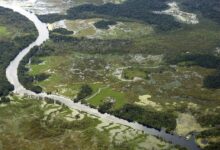
As ice melts at the poles, Brazil dries up. Between 2023 and 2024, the Amazon will face its worst drought in four decades. Rivers such as the Negro and Solimões have reached historically low levels, isolating communities, interrupting river transport and compromising water and food supplies.
In the Amazon, the extreme drought of 2024 had dramatic impacts on aquatic fauna, especially in Lake Tefé, where the combination of the sharp retreat of water levels and the rise in temperatures – which reached peaks of 40 °C – resulted in the death of dozens of red dolphins and tucuxis, species already threatened with extinction. In addition to the suffering of aquatic mammals, the drought also caused the death of fish and worsened the situation of riverside communities, which faced isolation and difficulties in accessing drinking water and food. Researchers warn that the continuation of this scenario could further compromise local biodiversity and the food security of the Amazonian population.
Extreme drought is also threatening riverine livelihoods and regional biodiversity. UNICEF estimates that nearly 500,000 children are at risk due to lack of clean water, food and access to school in the region.
Crisis announced: impacts intensified by climate change
The current situation is not just a natural tragedy—it is the direct result of inaction in the face of repeated scientific warnings. For decades, researchers have warned that rising greenhouse gas emissions would lead to drastic changes in rainfall patterns, rising sea levels, and ecological collapse. What was once considered a far-fetched hypothesis is now confirmed by data, satellite imagery, and accounts from affected communities.
The 2005 drought, once considered an extreme event in the Amazon, has become just a preliminary reference point for the records set for 2023 and 2024. The “Atlas of Climate Violence” shows that Brazil has experienced a 460% increase in climate disasters since the 1990s, which highlights the intensification of the problem. The impacts go far beyond the environment: they threaten human lives, food security, economic stability and social rights. According to estimates, each additional 0.1°C of warming could generate losses of R$5.6 billion per year for the country.
We are facing a crisis that was announced, but neglected by successive governments and productive sectors that still resist adopting profound ecological transitions.
Environmental education as a strategic tool
In this alarming scenario, education is no longer just a tool for raising awareness, but rather an instrument for civil defense and citizenship. Training young people to understand the mechanisms of global warming, interpret climate data and engage in local and global solutions has become a strategic priority.
Teachers and students play a fundamental role in building social resilience. The classroom must also be a space for preparing students to face extreme events, for debating climate justice, and for encouraging participation in political decisions that will shape the future of the country.
Belém and COP30: the Amazon at the center of global climate decisions
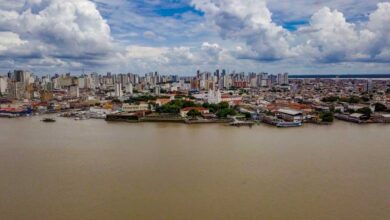
The upcoming COP30, which will be held in 2025 in the city of Belém — the capital of Pará, in the heart of the Brazilian Amazon — represents a historic and deeply symbolic opportunity. Holding the largest climate meeting on the planet in an Amazonian metropolis reinforces the urgency of protecting the biome that is considered the “lungs of Brazil” and one of the most important climate regulators in the world. Belém will be the stage for global decisions that need to consider not only carbon targets, but also environmental justice, financing for adaptation and protection of forest peoples. The event needs to reflect the leading role of environmental education as a cross-cutting axis of negotiations and public policies. Without an informed, engaged and critical population, no international agreement will be enough to reverse the climate crisis.
Sources and references : National Snow and Ice Data Center (NSIDC), Copernicus Climate Change Service (C3S), IPCC, The Guardian, Washington Post, Financial Times (FT), UNICEF, Atlas da Violência Climática, INMET, INPE, as well as local interviews and reports (G1, Amazônia Real, O Liberal).